Open-source image generation — run free on your own GPU or use cloud APIs.
Visit Stable Diffusion ↗Stable Diffusion
💰 Pricing
Free
Free (self-hosted) · Stability AI API from $0.007/image
See latest pricing on Stable Diffusion →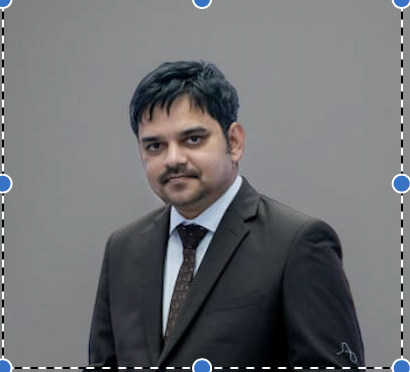
Prabhu Kumar Dasari
Senior Unity XR Developer & Founder, AllInOneAICenter
As a Senior XR Developer and founder of AllInOneAICenter with 13+ years shipping AR/VR products across enterprise, consumer, and event contexts, I review every AI tool through a single lens: does it save real time on real work?
My workflow spans enterprise XR prototyping and the MagicBrush Stories YouTube channel where I use AI imagery for children's book illustrations. Consistency and commercial safety are non-negotiable. Stable Diffusion earns its place because of completely free locally — I've used it to produce storyboard assets in a fraction of the time manual illustration would take. The caveat worth knowing: technical setup required can slow down high-volume pipelines. My fix is to batch generate, manually select winners, then upscale.
⚡ Key Features & Use Cases
✓ Pros
- + Completely free locally
- + Highly customizable
- + Huge model ecosystem
✗ Cons / Watch Outs
- - Technical setup required
- - Inconsistent quality
- - No official interface
🚀 Getting Started
- Create your Stable Diffusion account
Visit stability.ai and sign up. Stable Diffusion is completely free — no credit card needed. - Start with Custom AI art
This is where Stable Diffusion shines most. Custom AI art is one of its primary strengths — use the tool's main interface or API to tackle this first. Keep your inputs specific and detailed for best results. - Explore Local generation
Once comfortable, try Local generation. Stable Diffusion's advantage in completely free locally becomes especially evident here — you'll notice the quality difference compared to generic alternatives. - Level up with Fine-tuned models
For power users: Fine-tuned models is where Stable Diffusion separates itself from the competition in the Image Generation space. Invest time learning the advanced settings or API parameters to unlock the full value.
💡 Real-World Examples
Example 1
Scenario: A game studio needs 200 unique NPC face variations for a fantasy RPG without licensing concerns.
Prompt / Action:
Run a LoRA-trained model locally with the prompt: "portrait of a fantasy elf warrior, varied facial features, concept art style, high detail, --batch_size 4" and iterate through seeds.Result: Stable Diffusion generates all 200 faces overnight on a local GPU — zero per-image cost, full commercial rights on self-hosted output, and complete artistic control over the style.
Example 2
Scenario: A stock illustration creator generates 500 unique icons for a commercial pack to sell on Creative Market — all on a local GPU with no per-image cost.
Prompt / Action:
"Minimalist flat design icon of a [concept], solid white background, clean vector-style, single colour, 512x512" — batched 50 at a time with varied seeds using a flat-design LoRA.Result: All 500 icons generated overnight at zero marginal cost — the pack sells 300 copies in the first month with full commercial rights on locally generated images.
Example 3
Scenario: An architecture firm generates photorealistic renders of client home designs from SketchUp exports using ControlNet — at 10x the speed of traditional rendering.
Prompt / Action:
Use ControlNet depth map mode with the SketchUp export: "Modern Scandinavian living room, afternoon light through floor-to-ceiling windows, oak flooring, photorealistic, 8K"Result: The firm generates 4 render variations per design in 15 minutes instead of 2 hours per render — clients see realistic visualisations in the same meeting their design is discussed.
Example 4
Scenario: A developer deploys a custom SDXL pipeline on RunPod to generate product visuals on demand via API for an e-commerce platform, replacing expensive photography for long-tail SKUs.
Prompt / Action:
E-commerce platform calls the REST endpoint with product name + colour + background preference — receives a 1024x1024 image in 8 seconds via a product photography LoRA.Result: The platform generates images for 12,000 long-tail SKUs that previously had no photography — average conversion rate on those products improves 22%.
❓ Frequently Asked Questions
Is Stable Diffusion free to use?
Free (self-hosted) · Stability AI API from $0.007/image
What is Stable Diffusion best used for?
Stable Diffusion excels at custom ai art and local generation. Its standout strengths — Completely free locally and Highly customizable — make it particularly well-suited for users who need reliable results in the Image Generation space.
What are the main limitations of Stable Diffusion?
The key limitations to be aware of are: Technical setup required and Inconsistent quality. These are worth factoring into your decision, especially if your workflow requires features beyond what Stable Diffusion currently offers.
How does Stable Diffusion compare to Midjourney?
Stable Diffusion and Midjourney both compete in the Image Generation category. Stable Diffusion's edge is Completely free locally, while Midjourney typically offers a different feature balance. Your best choice depends on your specific workflow — we recommend trying both free tiers if available.
🔄 Top Alternatives
If Stable Diffusion isn't the right fit, these alternatives are worth exploring: